Floral Fine Line Seamless Patterns: A Minimalist’s Guide to Beautiful, Versatile Prints
If you’ve ever struggled to find a pattern that feels both delicate and adaptable, you may have encountered exactly what you need: Floral Fine Line Seamless Patterns. This minimalistic set of line art designs brings a refined, airy aesthetic to any project—from wedding invitations and social media templates to textile prints and packaging. But even with a high-quality resource like this, small mistakes in selection or application can undermine your results. Let’s walk through the most common pitfalls and how to avoid them, so you can make the most of these seamless patterns every time.
Understanding What Makes Floral Fine Line Seamless Patterns Unique
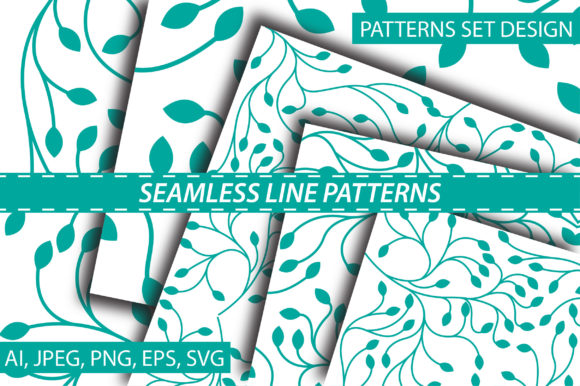
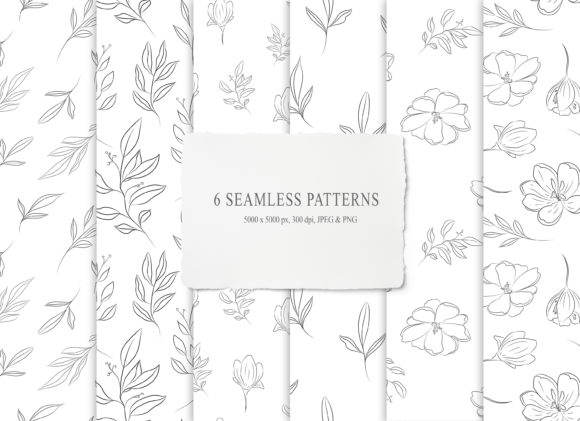
Before diving into usage, it helps to appreciate why these patterns stand out. Unlike bold, densely filled florals, fine line designs rely on clean, continuous strokes. They create a sense of elegance and breathing room, making them ideal for both digital and print projects. The set includes six high-quality seamless patterns in JPG and PNG formats, each with a transparent background and a generous 5000 x 5000 pixel resolution. That resolution alone gives you flexibility—you can scale the pattern down for a small greeting card or up for a large poster without worrying about pixelation.
However, that flexibility can be a double-edged sword if you don’t treat the files correctly. Many users assume that a high-resolution PNG with transparency will automatically look perfect everywhere. In reality, the success of your final design depends on several factors that are easy to overlook.
Mistake #1: Using the Wrong File Format for Your Output
The set includes both JPG and PNG versions with transparency. But which one should you use? A common error is to grab the JPG for a project that requires a clear background, only to discover a white box around the pattern. Or conversely, using the PNG in a print layout where a background color is already present, leading to unexpected blending issues.
Better approach: Use the PNG with transparency whenever you plan to place the pattern over another color or image. For standalone backgrounds where you want a solid white or colored backing, the JPG can be perfectly fine—just make sure the edge of the pattern aligns with your canvas. Always preview your file against the intended background before committing. If you’re designing for print, consider converting to CMYK early to avoid color shifts.
Mistake #2: Misjudging Scale and Repetition
Seamless patterns repeat. That’s the point. But a frequent oversight is applying the pattern at a scale that makes the repeat too obvious or too busy. For example, using the full 5000×5000 pixel pattern as a tile on a standard letter-size document might create a repeating block that feels cramped. On the other hand, scaling it down too much can turn the fine lines into indistinct smudges.
Better approach: Test the pattern at different sizes. A good rule of thumb is to adjust the tile size so that the repeat is noticeable only on close inspection—this gives a hand-drawn, organic feel. For wallpapers or wrapping paper, a larger repeat can work beautifully because the viewer sees the full pattern at a distance. For social media templates or small cards, consider cropping a section of the pattern rather than tiling, especially if the seamless repeat is too small for the canvas.
Mistake #3: Overlooking Color and Background Compatibility
Floral Fine Line Seamless Patterns are line art, meaning they typically come in a single color—often black or dark gray—over a transparent background. Many users drop them onto a busy background without checking contrast, and the fine lines get lost. Another common issue is using a pattern with thin lines on a textured or patterned surface, where the detail becomes visually noisy.
Better approach: Choose a background that lets the lines stand out. White, pastel, or solid muted colors work best. If you need to place the pattern over an image, consider adding a subtle overlay or reducing opacity slightly to maintain readability. Also, you can recolor the pattern itself—since it’s a PNG with transparency, you can adjust hue and saturation in your editing software. This lets you match any color scheme while preserving the fine line aesthetic.
Mistake #4: Skipping a Print Test Before Production
One of the biggest disappointments happens when a pattern looks perfect on screen but prints poorly. Fine lines may become faint, broken, or blurry, especially on absorbent materials like paper or fabric. Printers vary, and so do substrates. Many creators assume the 5000×5000 pixel resolution guarantees sharp results, but resolution alone doesn’t account for ink spread or paper texture.
Better approach: Always print a small test sample on the exact material you plan to use. Check line thickness—if the lines appear too thin, you can slightly thicken them in your design software before printing. For textile printing, consider how the pattern will repeat over seams. If you’re selling printed items, test at least one prototype to ensure the pattern aligns with your quality standards. This saves money and customer dissatisfaction in the long run.
What to Check Before Using These Patterns in Your Projects
Before you download or purchase a set like Floral Fine Line Seamless Patterns, take a moment to verify a few key points. The set should list the file dimensions clearly—here it’s 5000×5000 pixels, which is excellent for most uses. Confirm that the transparency is truly transparent and not a white layer masked out. Look at sample images to see if the line weight suits your style. Some minimalistic patterns use very thin strokes that may not reproduce well on rough surfaces, while others have a slightly bolder line that reads clearly even at small sizes.
Also, understand the license terms. If you plan to use the patterns in products you sell (like wrapping paper or mugs), ensure the license allows commercial use. Reputable sets often include both personal and commercial rights, but always check the fine print.
Practical Tips for Getting the Best Results
- Layer wisely: Place the pattern on a separate layer so you can adjust opacity, blend modes, or scaling without affecting other elements.
- Combine patterns: Since the set includes six variations, try overlapping two patterns with different opacities for a unique custom design. This works particularly well for wedding invitations or posters.
- Export at appropriate sizes: For digital use, export at 72–150 DPI. For print, set your document to 300 DPI and scale the pattern accordingly. The 5000×5000 pixel file gives you plenty of room.
- Mind the margin: When printing on fabric or paper, leave at least a quarter-inch bleed area so the pattern doesn’t get cut off discontinuously.
Real-World Examples of Better Choices
Imagine you’re designing a scrapbook page. Instead of using the full repeat, you could clip a single floral motif from the pattern and use it as a corner accent. That creates a curated, handmade feel rather than a wallpapered look. For a tote bag, consider using the pattern as an all-over print but with a lighter color so the lines don’t overpower the fabric texture. On a greeting card, apply the pattern only to a banded section—like the bottom third—and leave the rest blank for a modern, airy layout.
Another example: a small business owner creating social media templates for Instagram. Using the pattern as a subtle background at 20–30% opacity allows text to remain readable while adding elegance. Many beginners at graphic design make the pattern too prominent, making text hard to read. A little restraint goes a long way.
Why This Set Works for Both Beginners and Professionals
The beauty of a well-made seamless pattern set is that it removes guesswork. You don’t need to create your own repeating motifs from scratch. But even professionals can misjudge how a pattern behaves across different media. By being aware of the common mistakes above, you can sidestep frustration and produce polished, professional results from the start. Whether you’re a blogger designing a newsletter header, an educator making classroom materials, or an entrepreneur printing bed linen, these Floral Fine Line Seamless Patterns give you a reliable foundation.
Remember: the goal is not to fill every surface with pattern, but to enhance your design with subtle, beautiful line art. Start with a clear vision of your output medium, test early, and adjust scale and color to match your brand or project. With the right approach, these minimalistic patterns become a versatile tool that elevates your work without extra effort.