Seamless Leaf Line Patterns: A Practical Guide to Choosing and Using Geometric Nature Designs
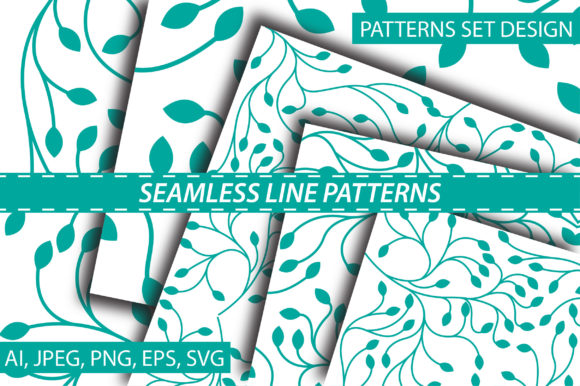
Adding a seamless pattern to your design project can transform it from ordinary to polished. But not all patterns are created equal, and subtle differences in structure, format, and style can make a significant impact on your final result. SIKEY STUDIO’s Seamless Leaf Line Patterns offer a minimalist, nature-inspired aesthetic built from a clever foundation: the humble circle. These five distinct designs use simple colors and flowing lines to create versatile repeats. Whether you are a freelancer working on a branding package, a small business owner designing product packaging, or a hobbyist creating custom wallpaper, understanding how to properly select and apply these assets will save you time and frustration.
Why Format Selection Matters More Than You Think
A common oversight when downloading design assets is ignoring the practical differences between file formats. Many users grab the JPEG and move on, only to encounter problems when they need to scale the pattern. The Seamless Leaf Line Patterns pack provides five formats: JPEG, PNG, EPS, SVG, and AI. Each serves a distinct purpose in a professional workflow.
Using a raster image for a large-scale print is a frequent source of disappointment. JPEG and PNG files are pixel-based. At their exact size of 864 by 864 pixels, they look crisp and clear. However, attempting to stretch that tile to fit a wall-sized wallpaper or a large book cover often leads to visible pixelation and a loss of sharpness. This is where the vector files come in. The AI and EPS formats allow you to scale the leaf line artwork to any dimension without losing a single line of definition.
What to do instead: Before starting your project, decide on your final output size. For digital mockups, social media graphics, or small printed items like gift tags, the PNG (which supports transparency) or JPEG is perfectly adequate. For commercial printing, fabric design, or large-format wallpaper, open the EPS or AI file. This small step ensures your pattern remains crisp and professional, regardless of scale.
Understanding the True Meaning of "Seamless"
The term "seamless" is widely used, but its execution varies greatly. A genuinely seamless pattern tiles perfectly across a surface without any visible seams, jumps, or awkward line breaks. A poorly constructed tile repeats with visible edges that break the illusion of an endless design.
The Seamless Leaf Line Patterns are constructed using a thoughtful geometric approach, starting with circles to create balanced, organic forms. However, even good patterns can be misapplied. A frequent mistake is testing the pattern only in a single tile view. The true test is seeing it repeated across a larger grid. If you open the tile and simply duplicate it side-by-side without checking the alignment of the lines at the edges, you might miss subtle misalignments that become obvious on a wall or fabric print.
A better approach: Before committing to a final design, create a swatch in your design software (like Photoshop, Illustrator, or Procreate) using the tile. Fill a large canvas or artboard with the repeating pattern. Step back and look for any evident "seams" or interruptions in the leaf lines. Because this set is built with geometric precision, the 864x864 pixel tile is mathematically structured to flow smoothly, but verifying this in your specific software setup is always a good habit. This ensures your final product looks like a continuous organic surface, not a grid of tiles.
Matching Style to Purpose: When Minimalist Line Art Works Best
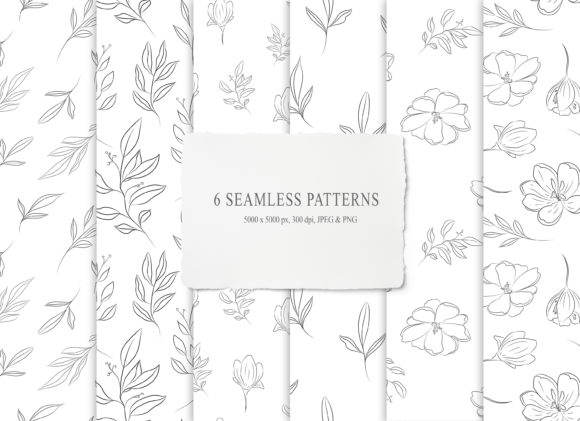
One of the most frequent misunderstandings in design is forcing a pattern into a project where it does not aesthetically belong. The Seamless Leaf Line Patterns are defined by simple lines, subtle curves, and restrained colors. They are not detailed botanical illustrations or heavy, textured graphics.
Attempting to use intricate, high-density patterns in smaller spaces can create visual clutter. Conversely, using a very sparse line pattern in a large area without considering scale can sometimes feel unfinished. The key is recognizing that these are line-art geometric patterns. They excel in modern, minimalist, or Scandinavian-style interiors. They work beautifully for book covers aiming for a clean, contemporary look. They also shine as accent elements in branding materials, such as the inner flap of a box or a subtle background on a business card.
Practical advice: Consider the role of negative space. These patterns use the interplay between the drawn leaf lines and the empty background. If you are designing a busy marketing brochure, a full-coverage pattern might compete with text. Instead, use it strategically: a half-page background, a border element, or a subtle watermark effect. For wallpaper, where the pattern is the star, these designs provide an elegant backdrop that does not overwhelm a room. Matching the inherent simplicity of the pattern with a clear purpose will always yield a more cohesive result.
Customization: The Missed Opportunity for Originality
Another common mistake is using a pattern exactly as downloaded without leveraging the customization potential of the vector files. Because the set comes in SVG and AI formats, you have full control over the color palette, stroke weights, and even the composition elements.
Many users assume the "simple colors" in the previews are the only option. This is limiting. If your brand uses a specific set of earthy tones or your room features a distinct accent color, you can easily modify the AI file. Changing the stroke color from black or dark green to a soft gold or a muted grey can completely change the mood of the pattern, making it feel custom-made for your project.
How to approach this: Open the AI or EPS file in a compatible vector editor. Isolate the line art. Try adjusting the stroke weight: a heavier line feels bolder and more graphic, while a thinner line feels delicate and elegant. Change the background transparency or add a subtle color fill behind the lines. This is one of the most valuable skills you can develop as a creator. By taking a few minutes to customize the Seamless Leaf Line Patterns, you move from simply using a design to owning it. You avoid the trap of your project looking like a generic template.
Leveraging the Full Set for Cohesive Projects
Buying a single pattern tile is useful, but owning a cohesive set of five variations opens the door to comprehensive design systems. A frequent oversight is failing to utilize the entire range of patterns provided. These five designs are created to share a visual language, meaning you can mix and match them seamlessly across different assets within the same project.
For example, if you are designing a brand identity for a botanical skincare line, you could use one pattern variation for the product box, a different variation for the instruction booklet cover, and another for the brand's social media templates. Because the underlying geometry and line quality are consistent, the entire suite of products will feel connected without being repetitive. This is a hallmark of professional design work that separates amateurs from seasoned creators.
A checklist for using the set:
- Variety for applications: Assign different pattern variations to different elements (packaging, website, stationery) to create a layered brand experience.
- Consistency check: Place all five patterns side-by-side to ensure they harmonize in scale and color weight. SIKEY STUDIO has engineered these to coordinate, but it helps to visually review them together.
- Print vs. Digital separation: Use a denser variation for digital backgrounds and a more open, airy variation for full-bleed print applications.
Technical Checks Before You Begin
Before diving into a full project, take five minutes to verify technical compatibility. The files are provided in AI 8 format, which ensures broad compatibility with older and newer versions of Adobe Illustrator. The SVG format is excellent for web use and works well in modern browsers and design tools like Figma or Canva. The EPS files are standard for large print shops.
What to verify:
- Color mode: The JPEG and PNG files are likely in RGB. For professional printing, convert the vector files to CMYK before finalizing. This ensures the simple colors in the pattern print as intended, with no unexpected shifts.
- DPI vs. PPI: For print, ensure your final pattern tile is at least 300 DPI at your intended print size. The 864x864 pixel tile at 300 DPI prints at roughly 2.88 x 2.88 inches. For larger prints, rely on the vector files to scale infinitely without losing quality.
- Software skills: Understand the basics of creating a pattern swatch in your chosen software. While the file is seamless, importing it correctly ensures the repeat function works perfectly.
Building Good Design Habits
The difference between a project that looks professional and one that looks average often comes down to the details hidden in the setup. Avoiding the common pitfalls of poor format selection, unused customization, and mismatched style is not difficult, but it requires intention. The Seamless Leaf Line Patterns from SIKEY STUDIO provide a solid foundation, built on clean geometry and thoughtful design. By treating your assets as flexible tools rather than fixed images, you unlock their full potential.
Pay attention to how your pattern behaves at scale. Respect the simplicity of the line art. Customize the colors to fit your unique vision. And do not hesitate to use the full set of five designs to build a rich, cohesive visual identity. These patterns are perfectly suited for wallpaper, book covers, and a wide range of design mockups. When you take the time to apply them correctly, you honor the craftsmanship that went into their creation.
To stay informed about new releases and to see how these designs are being used in creative projects around the world, be sure to follow SIKEY STUDIO. Connecting on social media is an excellent way to get inspiration and to be among the first to know about future pattern collections. The links are available on the profile. Thank you for your visit, and enjoy bringing these elegant leaf lines into your next creative endeavor.