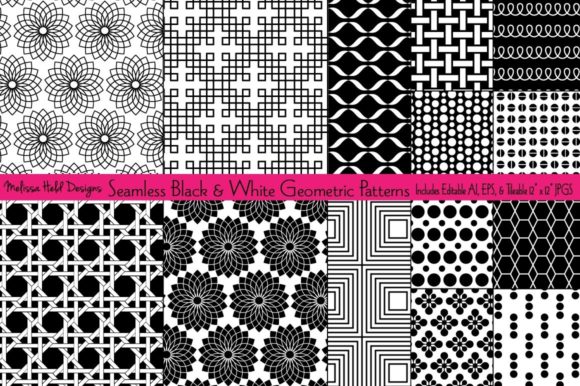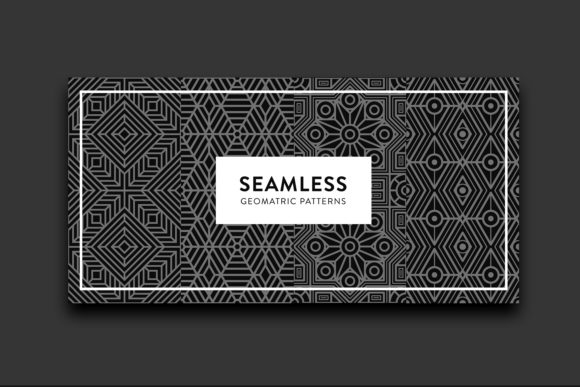
Seamless Geometric Patterns Vector: Where Precision Meets Fabric Printing Creativity
In the evolving landscape of surface design and textile production, few tools have proven as versatile and enduring as the seamless geometric patterns vector. Whether you are a seasoned textile designer, a print-on-demand entrepreneur, or a hobbyist exploring fabric printing for the first time, the ability to work with repeatable, mathematically precise patterns in a vector format opens up a world of practical possibilities. This product is featured in a CF Class Introduction to Printing on Fabric—a course designed to bridge the gap between digital design and physical textile creation—and it represents a foundational resource for anyone serious about producing professional-grade fabric prints.
What makes seamless geometric patterns vector files particularly compelling is their scalability and precision. Unlike raster images that lose clarity when resized, vector graphics maintain crisp edges and consistent detail at any dimension. This characteristic is essential when preparing artwork for fabric printing, where designs often need to be scaled up for yardage or adapted to different product formats without compromising quality. The Adobe Illustrator 10 EPS 10 format, in particular, offers cross-version compatibility that has made it a standard in the industry for years. Designers working with these files can open them in a wide range of software, edit individual elements, and output them for various printing methods, from screen printing to digital textile printing.
The relevance of seamless geometric patterns extends far beyond the design studio. In a market where custom textiles are increasingly demanded by consumers—from fashion brands seeking unique prints to home decor businesses offering personalized pillows and curtains—the ability to produce original, repeatable patterns quickly is a competitive advantage. Geometric patterns, with their clean lines, symmetry, and visual rhythm, are particularly well-suited to modern aesthetics. They appear in everything from contemporary apparel and accessories to upholstery, wallpaper, and gift wrap. The vector format ensures that these patterns can be manipulated, recolored, and customized to fit a brand's identity or a client's specific needs.
The Relevance of Seamless Geometric Patterns in Today's Creative Workflows
Current trends in both design and manufacturing are driving renewed interest in seamless geometric patterns vector files. Print-on-demand services have made it possible for independent creators to launch fabric-based product lines with minimal upfront investment. An entrepreneur can now design a pattern in Adobe Illustrator, upload it to a textile printer, and have finished goods shipped directly to customers. This shift has democratized the surface design industry, but it also places higher demands on the quality and technical readiness of the artwork. A seamless pattern that does not tile perfectly will result in visible seams on a finished garment or home decor item—a mistake that undermines the professionalism of the final product.
Geometric patterns are particularly forgiving for beginners learning fabric printing because their structure naturally lends itself to seamless repetition. A well-constructed vector file includes precise alignments, consistent spacing, and a clear understanding of how the pattern will repeat across a larger surface. For professionals, these same files serve as building blocks for more complex designs, offering a foundation that can be layered, masked, and transformed in endless ways. The Adobe Illustrator 10 EPS 10 format ensures that these files remain editable and accessible, even as software evolves.
Beyond the practicalities of production, there is a cultural shift toward intentional, locally inspired design. Geometric patterns have deep roots in art, architecture, and traditional textile crafts from around the world. A modern designer working with a seamless geometric patterns vector is participating in a long tradition of pattern making, but doing so with tools that allow for rapid iteration and digital collaboration. This combination of heritage and technology resonates with consumers who value authenticity and craftsmanship.
How Vector Files and Adobe Illustrator EPS 10 Support Modern Fabric Printing
To understand why the seamless geometric patterns vector product is so directly relevant to fabric printing, it helps to look at the specific demands of the textile industry. Fabric printing often requires artwork at high resolution—frequently 300 dpi or higher—and in repeatable formats. Vector files bypass the resolution issue entirely because they are built from mathematical paths rather than pixels. This means a pattern can be enlarged to cover a bolt of fabric or reduced for a small accessory without any loss of fidelity.
The Adobe Illustrator 10 EPS 10 format is a particularly stable choice for long-term archiving and cross-platform use. EPS (Encapsulated PostScript) files have been a staple in professional design environments for decades. Version 10 compatibility ensures that the file can be opened in older versions of Illustrator as well as newer ones, and in many other vector editing programs. For a student taking the CF Class Introduction to Printing on Fabric, having access to templates and pattern files in this format means being able to focus on learning the printing process rather than troubleshooting file compatibility issues. The instructor can provide files that work reliably across different software setups, which is essential in a learning environment where students may be using various versions of design tools.
Another practical advantage is that vector files allow for easy color separation, which is critical in screen printing. A seamless geometric pattern designed in vectors can be output as individual layers for each ink color, making the transition from digital design to physical screen preparation much more straightforward. For digital textile printing, the same vector file can provide clean, continuous data that the printer interprets accurately, resulting in sharp edges and vibrant colors on fabric.
Why Designers and Entrepreneurs Are Turning to Geometric Patterns for Fabric
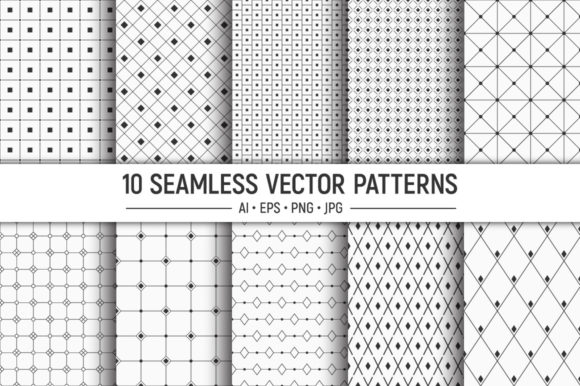
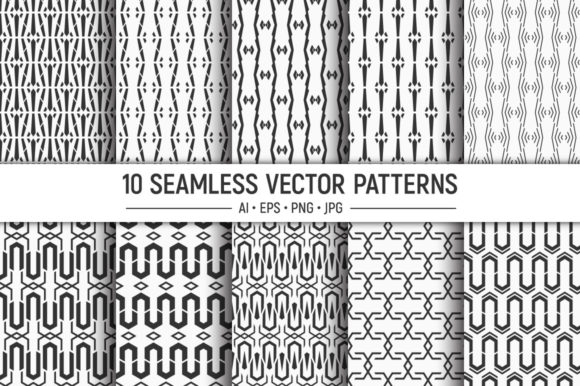
There is a noticeable shift in the marketplace toward patterns that feel both timeless and contemporary. Geometric designs occupy a unique space in this landscape. They can be bold and graphic, subtle and minimalist, or intricately detailed depending on the arrangement of shapes and colors. A single seamless geometric patterns vector file might contain multiple variations—think concentric circles, repeating triangles, interlocking hexagons, or stylized diamond grids—that can be adapted for different product lines.
For a small business owner launching a fabric collection, starting with geometric patterns reduces the risk of the design feeling dated within a few seasons. Clean geometric motifs have a long shelf life in fashion and home decor because they are less tied to passing trends than representational or highly stylized patterns. They also work well in combination with other design elements, such as typography or photographic imagery, which makes them valuable for branding and marketing materials.
Educators teaching surface design or textile printing find that seamless geometric patterns provide an excellent entry point for students learning about repetition, scale, and color theory. The CF Class Introduction to Printing on Fabric, for example, uses this type of pattern file to demonstrate how digital designs translate to physical textiles. Students can see firsthand how a pattern that looks correct on screen behaves when repeated on fabric, and they learn to adjust file parameters to achieve the desired result. This hands-on experience with vector files builds a skill set that is directly transferable to professional work.
Practical Applications: From Digital Files to Physical Textiles
Let us consider a realistic scenario. A freelance surface designer is hired to create a collection of scarves for a boutique brand. The client wants a series of geometric patterns that evoke mid-century modern aesthetics. The designer opens a seamless geometric patterns vector file in Adobe Illustrator, modifies the color palette to match the brand's seasonal colors, adjusts the scale of the pattern to suit the scarf dimensions, and exports the file in the correct format for the textile printer. What might have taken weeks of manual tile creation and adjustment can be accomplished in a matter of hours, with the assurance that the pattern will repeat flawlessly across the fabric.
For a print-on-demand entrepreneur, the workflow is similar. They might purchase a set of vector pattern files, customize them using Adobe Illustrator, and upload them to a platform that prints on clothing, bags, or home decor. The key is that the vector file remains editable and scalable, allowing for multiple variations from a single source. One pattern can be produced in several colorways, or rotated and mirrored to create entirely new looks, without starting from scratch.
In an educational setting, the same files are used to teach the fundamentals of repeat patterns. Students learn how to create a seamless tile in Illustrator, how to test the repeat, and how to prepare the file for different fabric printing methods. The CF Class Introduction to Printing on Fabric provides exactly this kind of structured learning, using a vector pattern product as a core resource. Students come away not just with theoretical knowledge but with a tangible pattern file they can use in their own projects.
Getting Started with Seamless Geometric Patterns for Fabric Printing
For those who are new to working with vector files for fabric printing, the most important step is to ensure that the pattern is truly seamless. A seamless pattern tile should align perfectly when placed side by side vertically and horizontally. In Adobe Illustrator, this can be checked using the Pattern Preview mode or by creating a larger tile and examining the joins. The seamless geometric patterns vector files included in this product have been pre-checked for repeatability, which saves significant time and eliminates guesswork.
Another consideration is the scale of the pattern relative to the final product. A geometric pattern that looks balanced on a small swatch may appear too dense or too sparse when printed on a full-length garment or a large piece of fabric. Vector files make it easy to adjust scale without distorting the design. Users are encouraged to test different sizes before committing to a final print run. Many textile printers will provide a sample swatch service, and taking advantage of this can prevent costly mistakes.
Color management is equally important. The colors displayed on a computer monitor are not always identical to what is printed on fabric, especially across different printing techniques and fabric substrates. Users should work with color profiles recommended by their printer and consider ordering physical color swatches before production. The vector file format preserves color information cleanly, but the final output depends on the printer's calibration and the fabric's absorbency.
Finally, it is worth noting that the Adobe Illustrator 10 EPS 10 format is widely supported, but some features—such as certain effects or transparency settings—may not transfer perfectly between older and newer versions. For the patterns in this product, the files have been prepared to maintain compatibility across a broad range of software setups. If you are using a version of Illustrator that predates 10, you may need to open the file in a newer version first and then export it to a more compatible format. In general, EPS 10 is a safe choice for most professional workflows.
The Role of the CF Class Introduction to Printing on Fabric
The seamless geometric patterns vector product is not just a set of design files; it is a teaching tool embedded in a larger learning experience. The CF Class Introduction to Printing on Fabric covers the entire process from concept to finished textile, including pattern preparation, color theory, printing techniques, and finishing. By using a real product—vector pattern files in the Adobe Illustrator 10 EPS 10 format—students gain practical experience that mirrors professional practice. The class addresses common pitfalls such as misaligned repeats, incorrect file formats, and color discrepancies, equipping participants with actionable solutions.
Whether you are a marketer looking to understand the design process behind custom branded merchandise, a blogger writing about DIY home decor, or an educator seeking curriculum materials, the combination of this vector product and the CF Class offers a structured, reliable path to competence. The patterns are designed to be used immediately, and the class provides the context to use them well.
In a world where digital tools and physical craftsmanship intersect more closely than ever, having a solid foundation in vector pattern design for fabric printing is not just an asset—it is increasingly a necessity. The seamless geometric patterns vector file set, combined with the knowledge gained from the CF Class Introduction to Printing on Fabric, positions you to create work that is both technically sound and creatively fulfilling.
For anyone ready to explore the possibilities of fabric printing, this product and the accompanying class are a practical, grounded starting point. The patterns are versatile, the format is industry-standard, and the learning is directly applicable. Whether your goal is to launch a product line, teach a workshop, or simply express your creative vision on fabric, the tools are at your fingertips.