Sloth Digital Papers Patterns for Creative Projects
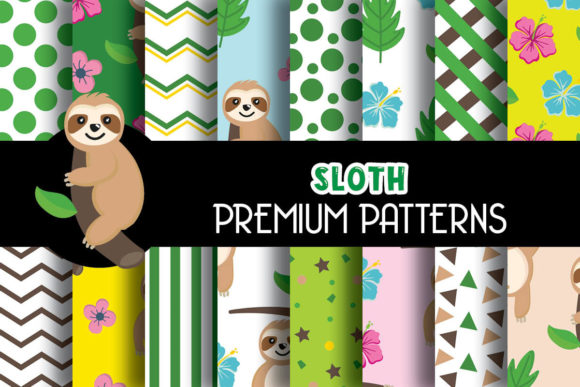
If you have ever spent time hunting for the perfect background for a birthday invite, a scrapbook layout, or a social media graphic, you already understand how much visual texture can elevate a project. The Sloth Digital Papers Patterns collection brings together sixteen premium digital paper backgrounds that feature clean, charming sloth motifs. These are not generic animal prints. Each pattern has been thoughtfully designed to offer something practical for anyone who works with digital or physical paper crafts. Whether you are a freelance designer, a teacher preparing classroom materials, or a hobbyist putting together a family album, these papers give you a solid foundation without requiring hours of searching or editing.
What Makes These Sloth Patterns Different
The collection stands out because it focuses specifically on sloth imagery that is playful without being childish, detailed without being overwhelming. You get variety across the sixteen sheets: some patterns are subtle and repetitive, ideal for backgrounds where text needs to remain readable; others are bolder and more illustrative, perfect for focal points or accents. The colour palettes lean toward warm neutrals, soft greens, and muted earth tones, so they pair well with many other design elements you might already have in your toolkit. Each paper is delivered as a high-resolution digital file, which means you can scale it for print projects up to a decent size without losing clarity.
One notable quality is the balance between pattern density and negative space. You will find designs where sloths are scattered across a solid background, allowing plenty of room for layering photos or text. Other sheets feature tighter repeating patterns that work beautifully as wrapping paper, drawer liners, or book covers. This range makes the collection useful for both detailed collage work and quick, clean designs.
Practical Applications Across Different Environments
Because the collection includes multiple pattern styles, it works well in a surprising number of settings. Below are some of the most effective ways to put these papers to use, organised by the type of project or environment.
Personal and Family Projects
Birthday invitations and party decorations are an obvious fit. A sloth-themed party for a child or even an adult who loves these animals becomes instantly cohesive when you use matching digital papers for the invite, banner, and thank-you cards. You can print the papers at home or send them to a local print shop for a more polished finish. Beyond parties, these patterns work well for:
- Scrapbooking layouts – use a subtle pattern as the base page and a bolder one for photo mats or journaling blocks.
- Homemade greeting cards – print, fold, and add a handwritten note for a personal touch that stands out from store-bought cards.
- Gift wrapping and tags – wrap small presents in the paper or cut out tags to coordinate with plain wrapping.
- Family photo albums – create consistent themed pages for a holiday or a milestone event.
Professional and Commercial Use
For entrepreneurs, small business owners, and freelancers, having a set of quality digital papers on hand can save time and money. You do not need to commission an illustrator every time you want a themed background. Consider these real-world applications:
- Social media graphics – use a sloth pattern as the background for quote posts, product announcements, or story highlights. The soft colours keep the focus on your message.
- Product packaging – if you sell sloth-themed merchandise, using matching paper as box liners, tissue wrap, or insert cards reinforces your brand identity.
- Etsy printables – create digital planners, sticker sheets, or wall art that buyers can download and use immediately. The sloth patterns give you a ready-made aesthetic.
- Marketing materials – flyers, brochures, or email headers gain visual interest when you incorporate a subtle pattern behind text or as a border element.
Educational and Classroom Settings
Teachers and educators often need engaging visual materials that do not distract from learning objectives. Sloth Digital Papers Patterns offer a middle ground. The patterns are appealing enough to hold a child's attention but not so busy that they interfere with reading or writing tasks. Use them for:
- Classroom labels and name tags – print on sticker paper and cut out for cubbies, folders, or desk labels.
- Lesson worksheets – add a subtle sloth border or background to make worksheets more inviting, especially for younger students.
- Bulletin board backgrounds – instead of plain butcher paper, use a printed pattern to create a themed display for a unit on rainforest animals.
- Reward charts and certificates – give students a visual incentive with a fun, consistent theme throughout the term.
Creative and Hobbyist Projects
If you enjoy crafting in your spare time, these papers open up possibilities for more elaborate work. Card makers, journaling enthusiasts, and mixed-media artists can all benefit from having a library of patterns ready to go. For example, you might:
- Create a junk journal – print several patterns at different scales and bind them together with other ephemera for a unique, tactile journal.
- Decorate a planner – cut out small squares or circles from the papers and use them as page accents, tabs, or pocket inserts.
- Make gift tags and favour boxes – print, cut, and assemble small items for party favours or holiday gifts.
- Design digital wallpapers – resize the patterns for phone or desktop backgrounds that are cute but not distracting.
Key Benefits for Usability and Efficiency
One of the main advantages of working with a curated collection like this is the time saved. Instead of searching multiple websites for a cohesive set of patterns, you have sixteen papers that already work together. This matters most when you are on a deadline, whether you are preparing materials for a client meeting or finalising a party weekend. The consistency across the set means you can mix and match freely without worrying about clashing colours or conflicting styles.
Another benefit is the versatility of digital files. Because these are digital papers, you can resize, rotate, crop, or layer them in any software you already use. Print them at home, upload them to a print-on-demand service, or insert them into a digital scrapbooking app. There is no physical inventory to store, and you can reuse the files as many times as you need. For anyone who runs a small creative business, this kind of reusable resource improves your bottom line because you are not constantly buying new materials for each project.
From a branding perspective, using consistent visual elements across different channels helps your audience recognise your work. If you sell sloth-themed products or run a blog about slow living, these patterns reinforce that identity in a subtle, professional way. Customers begin to associate the soft, playful aesthetic with your brand, which builds trust over time.
Considerations When Choosing and Using Digital Papers
Even with a great collection, a few practical points can help you get the most out of it. First, always check the resolution and file format before starting a project. Most premium digital papers come in high-resolution JPEG or PNG format at 300 DPI, which is print-ready. If you plan to use the papers for large-format printing, confirm that the files scale well without pixelation. The Sloth Digital Papers Patterns set is designed to handle standard print sizes, but it is worth testing a small section first if you are working with an unusual dimension.
Second, consider the colour profile. Digital screens use RGB, while most commercial printers use CMYK. If you are sending the papers to a professional printer, you may need to convert the files or ask the printer to handle the conversion. For home printing, RGB usually works fine because consumer printers manage the conversion automatically. A quick test print on plain paper can save you from wasting expensive photo paper or cardstock.
Third, think about how the patterns will interact with other elements in your layout. A dense pattern may overwhelm small text or intricate cut shapes. When in doubt, use the busier designs as accents rather than full backgrounds. Conversely, a sparse pattern might not provide enough visual weight for a large surface area. The variety in this collection helps you handle both scenarios without having to edit the files yourself.
Finally, store your digital papers in an organised folder structure on your computer or cloud drive. Name the files descriptively so you can find the right pattern quickly later. A simple naming convention like “SlothPattern_Dense_Green” or “SlothPattern_Subtile_Beige” saves time when you are in the middle of a project and need a specific look.
Who Will Benefit Most from This Collection
While the patterns are accessible to anyone, certain groups will find them especially valuable. Freelance graphic designers who work on themed projects for clients can pull from this set to offer quick mockups without starting from scratch. Bloggers and content creators who maintain a consistent visual brand can use the papers as backdrops for photography, video thumbnails, or Pinterest pins. Teachers who cycle through different classroom themes each year can reuse the files across multiple terms without purchasing new supplies. Hobbyist crafters who enjoy creating personalised gifts for friends and family will appreciate having a library of designs ready for last-minute projects.
The collection also appeals to anyone who appreciates a unified aesthetic. If you have ever assembled a scrapbook page only to realise the papers do not quite match, you know how frustrating that can be. These sixteen patterns are designed to complement each other, so you can combine any two or three sheets and the result will feel intentional.
Making the Most of Sloth Digital Papers Patterns
To get started, open your preferred editing software and experiment with layering a subtle pattern behind a bold headline. See how the colours interact with your existing palette. Try printing one sheet on matte cardstock for a handmade card and another on glossy paper for a party banner. The same digital file behaves differently depending on the paper stock, so testing is worthwhile. If you are new to working with digital papers, start with a simple project like a greeting card or a social media post. That will give you a feel for how the patterns scale and how much contrast you need to keep text readable.
Over time, you will develop a sense of which patterns work best for specific applications. The dense, repeating motifs are excellent for small items like gift tags or bookmarks, where you want the pattern to be clearly visible. The more open, scattered designs are better suited for larger surfaces like scrapbook layouts or wall art. And the mid-density patterns strike a useful balance for most everyday projects.
The Sloth Digital Papers Patterns collection is a practical resource that delivers on its promise: sixteen ready-to-use backgrounds that bring warmth, character, and consistency to a wide range of creative work. Whether you are preparing for a birthday celebration, stocking an Etsy shop, or refreshing your classroom materials, these papers give you a solid starting point without the usual hassle of sourcing and matching patterns yourself.