Why Cute Fresh Fruits Seamless Patterns Are a Staple for Creative Projects
In the world of design, few motifs carry the universal appeal of fresh fruit. Whether you are a graphic designer preparing a summer collection, a teacher crafting classroom materials, or a small business owner packaging artisanal products, the visual language of fruit can instantly communicate freshness, vitality, and approachability. What elevates this concept into a truly practical resource is the availability of cute fresh fruits seamless patterns—a collection of transparent, tileable designs that allow creators to integrate playful fruit imagery into virtually any medium without worrying about awkward edges or repetitive seams. These patterns are not mere decorations; they are tools for efficient, professional-grade work.
What sets these patterns apart is their deliberate design for versatility. Each pattern is built around a transparent background, meaning you can place it over any color, texture, or photograph. The tileability ensures that when repeated, the pattern flows continuously, making it ideal for large surfaces like wallpapers, fabric rolls, or digital banners. For anyone who has struggled with aligning repeating motifs or dealing with opaque backgrounds, this feature alone saves hours of manual correction. The cute fresh fruits seamless patterns thus solve a core problem in pattern design: the tension between aesthetic charm and technical precision.
Applications Across Industries: From Digital Media to Physical Products
The practical range of these patterns is surprisingly broad. Consider the digital space first. Bloggers and social media managers frequently need eye-catching backgrounds for quote cards, announcement posts, or story highlights. A pattern featuring watermelons, kiwis, and lemons can instantly brighten a food blog's sidebar or serve as a subtle overlay for a summer sale campaign. Because the patterns are transparent, they can be layered over brand colors or photographs without clashing. The same file can be used across different platforms—Instagram, Pinterest, or a website hero section—maintaining visual consistency.
In print, the applications multiply. Greeting card designers can use a single pattern as the background for a birthday card or cut elements from the pattern to create custom die-cut shapes. Invitations for baby showers, bridal events, or tropical-themed parties benefit from the cheerful, non-intimidating style of the fruit illustrations. The cute fresh fruits seamless patterns are also a natural fit for textile design: think of cotton fabrics for children's apparel, kitchen linens, or reusable tote bags. The 300 dpi resolution ensures that what looks crisp on screen also prints cleanly on fabric or paper, without pixelation or blur.
Educators and parents will find these patterns especially useful for learning materials. Flashcards, worksheets, and classroom posters that incorporate fruit motifs can make lessons more engaging for young children. The cute cartoon style is inviting without being overly complex, allowing kids to focus on the shapes and names of the fruits. Similarly, promotional items for farmers' markets, juice bars, or health food stores can leverage these patterns to reinforce a natural, wholesome brand image. A flyer using a seamless pattern of oranges and avocados communicates freshness at a glance, even before the reader processes the text.
The Design Appeal: Cute Cartoon Style and Fruit Variety
One reason these patterns work so well across contexts is the underlying illustration style. The fruits are drawn in a cute, cartoony manner—rounded edges, friendly expressions (where applicable), and simplified shapes that feel contemporary yet timeless. This style appeals to a wide demographic: children enjoy the playfulness, adults appreciate the nostalgia and lightheartedness, and brands use it to signal approachability. Unlike photorealistic fruit images that can feel sterile or overly commercial, the hand-drawn quality of these patterns adds warmth.
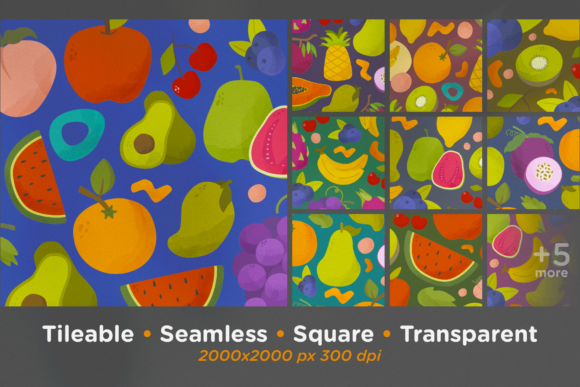
The variety of fruits included is another strength. The collection covers nineteen popular types: apple, avocado, banana, blueberry, cherry, dragon fruit, grape, guava, kiwi, lemon, mango, orange, papaya, passion fruit, peach, pear, pineapple, pomegranate, strawberry, and watermelon. This diversity means you are not limited to a single color palette or season. A pattern featuring tropical dragon fruit and passion fruit works for summer, while one with apples and pears fits autumn. The cute fresh fruits seamless patterns allow you to mix and match based on your project's tone, whether you need bright citrus colors or the deep reds and purples of berries and pomegranates.
Transparency and Tileability: Key Technical Advantages
From a technical standpoint, the transparent background is perhaps the most valuable feature. Standard patterns often come with a white or colored background, forcing you to either accept that base or spend time cutting out the elements. With transparent patterns, you can apply the fruit design over any solid color, gradient, or even a photographic backdrop. For example, a pattern of mangoes and bananas can be placed over a pastel yellow background for a soft look, or over a deep teal for contrast. This flexibility is especially useful for branding, where the exact background color is often dictated by a style guide.
Tileability is equally critical. A tileable pattern repeats seamlessly in both directions—horizontally and vertically—without visible joints. This is achieved through careful alignment of the fruit elements at the edges of the square. When you use a pattern in software like Adobe Illustrator, Photoshop, or even a web design tool, the repetition feels infinite and natural. The cute fresh fruits seamless patterns come in a square format of 2000 x 2000 pixels at 300 dpi, a resolution that is high enough for large-format printing (posters, banners) while remaining manageable for digital use. The PAT format (a Photoshop pattern file) allows for one-click application within that software, while the PNG versions are universally compatible.
Integration into Digital Workflows: How to Use the Patterns
Understanding how to incorporate these patterns into your workflow maximizes their value. If you use Adobe Photoshop, you can load the PAT file into your pattern library. Once loaded, you can select the pattern from the Layer Style options (Pattern Overlay) and instantly fill a shape, text, or background. Because the pattern is transparent, you can also use it as a clipping mask or a texture overlay. For users of other software—such as Canva, Procreate, Affinity Designer, or even Microsoft PowerPoint—the PNG files are more straightforward. Simply drag the image onto your canvas, resize it, and set the blending mode if needed. The transparency is preserved because the PNG format supports alpha channels.
For print-on-demand products, the workflow is similar. If you are designing phone cases, mugs, or notebooks on platforms like Printful or Redbubble, you can upload the PNG pattern directly and place it over a base color. The seamless repeat ensures that the design wraps around cylindrical objects without a noticeable break. Similarly, for fabric printing, you can use the pattern as a repeating fill in a vector or raster program before sending the file to a textile printer. The 300 dpi resolution meets the requirements for most commercial printing services, so there is no need to upscale or risk quality loss.
Why These Patterns Stand Out: Consistency, Quality, and Flexibility
The collection's strength lies in its consistency. All fifteen patterns share the same illustration style, level of detail, and color saturation. This means you can use multiple patterns within a single project—for example, a different fruit pattern on each page of a planner—without the designs clashing. The uniform 2000 x 2000 pixel square format also makes it easy to swap patterns without adjusting dimensions. You receive fifteen patterns in PAT format, fifteen in PNG format, and one layered PSD file. The PSD file is particularly useful if you need to rearrange individual fruit elements or create a custom pattern from the existing assets.
The flexibility extends to color customization. Because the fruit illustrations are drawn with clean, solid lines and flat colors (characteristic of cute cartoon style), you can easily recolor them using hue/saturation adjustments or by selecting individual color ranges. If your brand uses a specific shade of green or pink, you can modify the fruit colors to match. The transparent background ensures that any color adjustment affects only the fruit, not a surrounding background. This level of control is rare in ready-made pattern packs and adds significant value for professional designers who need to adhere to strict brand guidelines.
Considerations for Creators and Businesses
While these patterns are designed for ease of use, a few considerations can help you get the best results. First, because the patterns are in a square format, you may need to scale them differently for rectangular layouts. For a wall banner that is 24 inches wide by 6 feet tall, you might need to repeat the pattern multiple times vertically. Since the pattern is tileable, this is straightforward, but you should test the size of the fruit elements relative to your final output. A pattern that looks balanced on a small screen might feel too large or too small on a physical product. Most design software allows you to scale the pattern in the Fill or Layer Style settings without distorting the tiles.
Second, the cute cartoon style may not suit every brand voice. A luxury skincare line targeting a mature audience might find the style too playful. However, for brands aiming at younger demographics, children's products, or lifestyle content with a lighthearted tone, these patterns are ideal. Businesses should consider whether the fruit themes align with their seasonal campaigns. A juice bar might use the patterns year-round, while a stationery shop might feature them only during summer promotions. The collection's breadth of fruits—from common apples and bananas to exotic dragon fruit and guava—allows for thematic specificity.
Third, the patterns are most effective when used as backgrounds, accents, or small repeating elements rather than as primary focal points. Because they are seamless and repetitive, they work best to create texture and atmosphere. For a poster, you might use a fruit pattern as a full background with large typography overlaid. For a greeting card, you might use the pattern only on the back or as a border. The transparent PNG files also allow you to extract individual fruit elements if you need a standalone graphic—simply open the file and delete the parts you do not need, or use the layered PSD to isolate specific fruits.
Maximizing Use in Educational and Promotional Contexts
Educators can turn these patterns into interactive learning tools. Print the patterns on sticker paper to create fruit stickers for reward charts. Use the patterns as backgrounds for digital slideshows about nutrition or agriculture. Create matching games by printing two copies of a pattern and cutting out individual fruits. Because the illustrations are cute and non-threatening, they help reduce anxiety around learning new concepts. The variety of fruits also introduces children to less common varieties like dragon fruit or passion fruit, sparking curiosity about the natural world.
For promotional purposes, the patterns offer a cost-effective way to refresh your visual identity. Small businesses can download the collection and immediately create branded packaging, social media templates, and email newsletter headers. A coffee shop that sells fruit pastries could use a pattern of blueberries and strawberries on their takeaway bags. A fitness coach could use a pattern of watermelons and oranges on a hydration tracker printable. The key is to treat the pattern as a flexible asset rather than a fixed design. Since you own the files after purchase, you can adapt them endlessly without additional licensing fees.
Ultimately, the value of cute fresh fruits seamless patterns lies in their ability to save time while delivering professional aesthetics. Whether you are a hobbyist making party invitations for a friend or a marketing manager coordinating a national campaign, these patterns reduce the gap between concept and execution. The transparent, tileable format solves the most common technical headaches of pattern design, and the charming fruit illustrations ensure that your projects feel fresh, friendly, and visually engaging. By understanding the technical capabilities and creative possibilities of these patterns, you can integrate them into your work with confidence and efficiency.