Geometric Line Patterns for Design
Some design elements never go out of style, and the quiet power of simple geometry proves that truth year after year. When you strip away color noise and decorative excess, what remains is pure structure—a language of lines that speaks directly to the human eye. Geometric line patterns, especially those rooted in minimalist line geometry, offer designers a versatile foundation for everything from branding to product mockups. These aren't just abstract shapes; they are intentional compositions built from the most basic element of visual communication: the line.
Why Minimalist Line Geometry Works in Modern Design
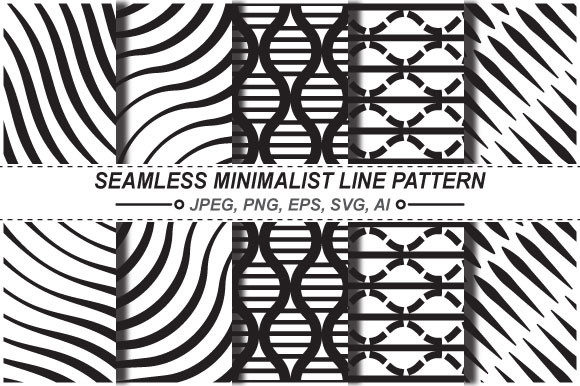
In a cluttered visual landscape, clarity stands out. Minimalist line geometry patterns rely on repetition, spacing, and angular precision to create rhythm without overwhelming the viewer. The beauty of these patterns lies in their adaptability. By starting with a single line and varying its direction, thickness, or arrangement, you can generate multiple distinct motifs that feel cohesive yet fresh. This approach supports strong visual hierarchy—the eye naturally follows the flow of lines, making it easier to guide attention in branding, editorial layouts, or UI components.
Practical Applications Across Creative Projects
The versatility of geometric line patterns makes them a go-to asset for designers working across multiple mediums. Here are just a few ways you can integrate these designs into your workflow:
- Branding and logo design – Clean line patterns reinforce modern aesthetics and scalability, translating perfectly from digital screens to embossed stationery.
- Marketing materials and business presentations – Use subtle line geometry as a background element to add structure without distracting from key messaging.
- Social media graphics – Consistent pattern usage builds brand identity and helps content stand out in busy feeds.
- Web and UI design – Repeating linear motifs can define sections, frame content, or serve as loading animations with minimal file weight.
- Editorial and print design – Book covers, magazine spreads, and brochures benefit from the clean visual tension these patterns provide.
- Packaging design – Minimalist line patterns lend themselves to product packaging that feels premium, uncluttered, and contemporary.
Bringing Patterns to Physical Products
One of the most exciting aspects of geometric line patterns is their suitability for real-world merchandise. These designs work beautifully when printed on wallpaper, where repeating line motifs can transform a room into a gallery of subtle movement. They also hold up well on fabric-based products such as dresses, tank tops, pillowcases, tote bags, and handkerchiefs. Because the patterns are derived from simple geometry, they scale cleanly across different surfaces without losing definition or visual impact.
What to Look for in a Quality Pattern Set
When selecting geometric line patterns for your projects, pay attention to file versatility and resolution. A comprehensive set should include multiple formats to accommodate different design workflows:
- JPEG and PNG files for quick previews and raster-based applications
- SVG and EPS files for scalable vector editing in tools like Illustrator or Figma
- AI files (Illustrator 8) for legacy compatibility and team collaboration
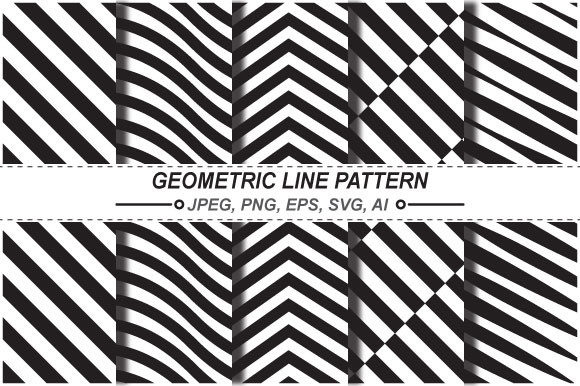
Working at a size of 864x864 pixels—or 12x12 inches—ensures your patterns have enough resolution for both digital display and high-quality print production. A set offering five distinct variations of line geometry gives you enough flexibility to explore different moods while maintaining a consistent design language.
Choosing the Right Pattern for Your Brand Identity
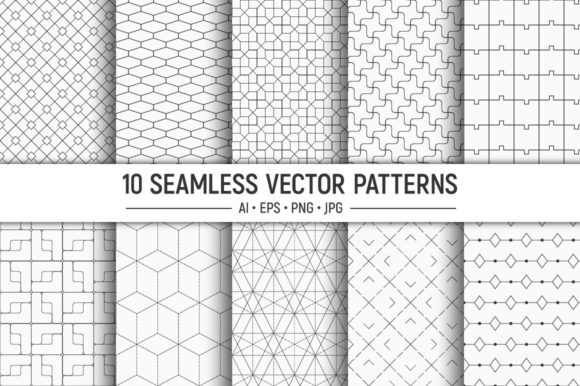
Not every geometric line pattern suits every brand. Consider your design goals and audience expectations. A dense, tightly spaced line grid might convey precision and technical rigor—ideal for fintech or architecture firms. A looser, more organic arrangement of staggered lines can feel approachable and creative, working well for lifestyle brands or editorial projects. Always test patterns against your existing color palette and typography to ensure visual harmony. Typography, in particular, interacts closely with line patterns; sans-serif typefaces often pair best with clean geometry, preserving readability and modern aesthetics.
It is also worth evaluating how a pattern behaves at different scales. A layout that looks balanced on a full-screen presentation may feel overwhelming on a business card. The best pattern sets allow you to scale elements up or down without losing their core structure. This scalability is essential for maintaining consistency across touchpoints—whether you are designing a website header, a product label, or a full wall mural.
Integrating Patterns into Your Design Workflow
Adding geometric line patterns to your creative toolkit is straightforward. Use them as subtle backdrops in social media templates to reinforce brand recognition. Overlay them on hero images in web design to create depth. In packaging design, let the pattern run continuously around a box or wrap to create a seamless gift-like presentation. For digital marketing materials, a well-placed line pattern can anchor a call-to-action or break up dense blocks of copy without needing additional imagery.
Remember that line patterns are not just decorative—they are structural tools. They help establish visual hierarchy, direct the viewer's eye, and create a sense of order that makes content more digestible. When used intentionally, they elevate both aesthetics and communication.
Final Thoughts on Quality Creative Assets
Thoughtful design choices start with reliable resources. Geometric line patterns rooted in minimalist line geometry provide a foundation that is both flexible and visually compelling. Whether you are building a brand identity from scratch, refreshing an existing product line, or creating mockups for client presentations, these patterns give you the freedom to experiment without losing coherence. Invest in high-quality, multi-format assets that scale across print and digital—and let the simple line do the heavy lifting. For the latest updates on design products and creative resources, follow along and explore new ways to bring structure and beauty into every project.