Tiger Collection Patterns Clipart: A Versatile Vector Design Resource for Creative Projects
If you work with digital design, fabric printing, or product decoration, you know how valuable a well-organized set of patterns and clipart can be. The Tiger Collection. Patterns Clipart brings together seven seamless patterns and a suite of individual elements in multiple file formats, giving you a ready-to-use toolkit for a wide range of creative applications. Whether you are designing for a small business, preparing materials for a personal project, or exploring new ideas for your portfolio, this collection offers practical solutions that save time and expand your options.
This article walks through what the Tiger Collection includes, the challenges it addresses, and how different users can make the most of it. The focus is on practical outcomes, not just features, so you can decide if this resource fits your workflow and goals.
What the Tiger Collection Offers
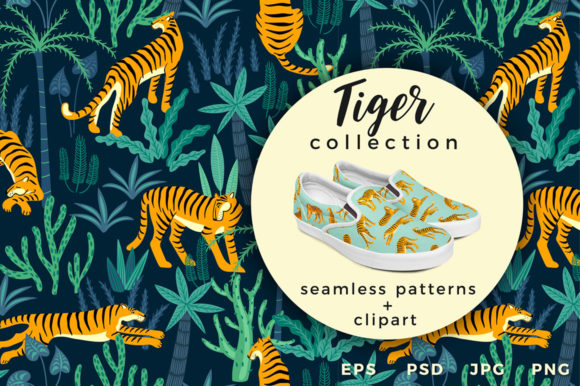
The Tiger Collection is a curated set of tiger-themed vector patterns and individual clipart elements. It includes seven seamless patterns, each designed to repeat without visible breaks, making them ideal for covering surfaces like fabric, paper, or wall sections. Alongside the patterns, you get separate clipart elements such as individual tiger motifs, paw prints, leaves, or other coordinating details that allow you to customize layouts or add focal points.
Each element and pattern is provided in multiple formats: EPS, PSD, JPG, and PNG. This range means you can work in vector software like Adobe Illustrator, edit layers in Photoshop, or use ready-made raster files directly in print-on-demand tools or online marketplaces. The inclusion of both patterns and individual pieces gives you flexibility to either fill a background with a repeating design or build a unique composition from scratch.
Common Challenges That Designers and Creators Face
Working with patterns and clipart sounds straightforward, but many creatives run into obstacles that slow down production or limit creativity. Understanding these pain points helps clarify why a collection like this can be a genuine asset.
- Finding cohesive, themed sets. Searching for individual patterns or clipart often results in mismatched styles. A tiger-themed pattern might not have a matching paw print or leaf motif, forcing you to combine elements from different sources and spend extra time harmonizing colors and line weights.
- Format limitations. Some resources only provide low-resolution JPGs or a single file type. This becomes a problem when you need scalable vectors for large prints or transparent PNGs for layered designs.
- Time spent on repetition. Creating a seamless pattern from scratch can take hours of trial and error. If you need multiple patterns for a collection, the effort multiplies quickly.
- Licensing and usage concerns. Many free or low-cost resources have unclear terms, especially for commercial products. Designers and small business owners need to know they can legally use the assets for t-shirts, cards, posters, and other merchandise.
- Inconsistent quality. Some clipart sets look great on screen but pixelate when printed, or the colors shift unexpectedly between file formats.
The Tiger Collection addresses each of these points directly. The patterns are already seamless, so you do not need to rebuild them. The files come in formats that cover both vector editing and direct use. And because the collection is built around a single theme, the elements work together without visual friction.
How the Tiger Collection Helps Solve These Problems
Let us look at how this resource translates into day-to-day usefulness for someone who regularly creates products or designs.
Ready-to-Use Patterns Save Production Time
Instead of constructing repeating motifs tile by tile, you can open an EPS file, adjust colors or scale if needed, and apply it to your project. The seven seamless patterns give you variety without extra work. If you are producing a line of tiger-themed fabric or paper goods, you can assign different patterns to different products while maintaining a consistent visual identity.
Individual Elements Offer Creative Control
Clipart elements such as tiger silhouettes, face motifs, or decorative accents let you break out of the pattern-only approach. For example, you could use a seamless pattern as a background for a poster and then place an individual tiger element on top as the focal image. This layered approach adds depth and professionalism without requiring complex illustration skills.
Multiple Formats Support Diverse Workflows
Not everyone uses the same software or output method. The EPS files keep your designs vector-based, which is essential for large-scale printing like posters or fabric yardage. The PSD files allow you to edit layers and add effects in Photoshop. The JPG and PNG versions are perfect for quick previews, online listings, or projects that do not require transparency. Having all four formats means you can move between tools without converting files and losing quality.
A Cohesive Theme Builds Brand Consistency
If you run a small online shop or create themed collections for events, having a unified look across your products strengthens recognition. Using the Tiger Collection for multiple items such as t-shirts, greeting cards, and wall art creates a professional, curated feel that customers notice.
Practical Applications Across Different Use Cases
Different users will approach the Tiger Collection in ways that match their specific needs. Here are a few scenarios that illustrate how the resource can be implemented effectively.
For Independent Fashion and Fabric Designers
A designer preparing a small run of custom fabric can use the seamless patterns as all-over prints for apparel, bags, or accessories. The individual elements can become appliqué patches, embroidery motifs, or accent prints on pockets and cuffs. Working with EPS or PSD files allows resizing and recoloring to match a seasonal palette. Because the patterns are seamless, the fabric yardage will look continuous, which is critical for professional apparel.
For Print-on-Demand Sellers
Sellers on platforms like Redbubble, Teespring, or Society6 often need to upload designs for multiple product types quickly. The JPG and PNG files work directly with most POD interfaces. For t-shirt designs, you can use a seamless pattern as the main print or combine it with a central tiger element from the clipart set. For posters and throw pillows, the higher resolution EPS or PSD files ensure sharp output at large sizes. The cohesive theme helps you create a product line that feels intentional rather than scattered.
For DIY Crafters and Hobbyists
If you make handmade cards, scrapbook pages, or home décor items, the Tiger Collection gives you a library of elements you can print at home. Use the seamless patterns as background paper for cards or as wrapping paper for small gifts. The individual clipart items can be cut out and decoupaged onto boxes, frames, or journals. Having both raster and vector options means you can print at different scales without losing clarity.
For Graphic Designers Creating Themed Content
A designer working on a children's book, a branding package for a wildlife event, or a social media campaign can use the patterns as backgrounds and the clipart as stand-alone graphics. The EPS format is particularly useful here because you can isolate individual shapes, change colors globally, and combine elements from different patterns to create something entirely new. The collection serves as a starting point that reduces the initial labor of concepting and asset creation.
Recommendations for Getting the Most Out of the Collection
To make the Tiger Collection work best for your projects, consider these practical tips.
- Check the file structure. When unzipping the downloaded files, organize them by format and content type. Label folders for patterns and individual elements so you can find what you need without digging through generic file names.
- Test patterns at your intended scale. Open the EPS or PSD file and scale the pattern up or down to see how the repeats look at your target size. Some patterns work beautifully at large scale for fabric, while smaller repeats suit paper products or cards.
- Create a color variation library. Because the files are layered, you can quickly generate alternative colorways. Save a few versions with different hues to give your product line more variety without designing new patterns.
- Combine patterns with other assets. The tiger theme is specific, but it can pair with neutral textures, botanical elements, or geometric shapes to create hybrid designs. Use the clipart as a bridge between the Tiger Collection and other resource sets you already own.
- Check commercial usage terms. Always confirm the license agreement that comes with your purchase. Most premium collections allow commercial use, but the specifics matter if you plan to sell large quantities or incorporate the designs into digital products.
Important Considerations When Using Patterns and Clipart
Even with a well-prepared collection, a few practical considerations can prevent problems later.
Resolution matters for print. The JPG files in the collection are likely high-resolution, but always verify the DPI (dots per inch) before sending to a printer. For professional printing, 300 DPI is standard. If you use the PNG or JPG files for large posters, confirm that the pixel dimensions match your output size.
Vector editing requires compatible software. EPS files work in Adobe Illustrator, CorelDRAW, Affinity Designer, and many free alternatives like Inkscape. If you do not have a vector editor, the PSD and PNG files still give you excellent options, but you lose the ability to scale without limit.
PSD files assume Photoshop layers. If you use other raster editors, check compatibility before relying on layer structures. Some programs may flatten the layers or fail to read certain effects.
Seamless patterns need correct placement. When applying a seamless pattern in your design software, make sure the alignment is set to tile or repeat properly. A misaligned pattern can break the illusion of a continuous surface.
Who Benefits Most From This Resource
The Tiger Collection is particularly useful for anyone who produces tiger-themed designs regularly or in bulk. Small business owners who run an animal-focused brand, event planners creating zoo or jungle parties, and content creators producing wildlife educational materials will find the collection saves significant time. It also serves designers who need a reliable starting point for client projects that require a wild or exotic aesthetic.
For hobbyists, the collection removes the barrier of advanced pattern creation. You do not need to learn how to construct seamless repeats or draw individual motifs from scratch. The files are ready to open and use, which means more time spent crafting and less time struggling with software.
The value of the Tiger Collection ultimately lies in its ability to support different workflows and skill levels. Whether you are a seasoned professional or someone just starting out with product creation, having a set of vetted, cohesive assets can make the difference between a project that feels like a chore and one that flows naturally from concept to finished piece.
Bringing It All Together
The Tiger Collection. Patterns Clipart is a practical resource for anyone who needs tiger-themed vector patterns and individual clipart elements in a ready-to-use format. It addresses common problems like mismatched styles, limited file formats, and the time cost of creating seamless repeats. With seven patterns and a set of coordinating clipart items offered in EPS, PSD, JPG, and PNG, it gives you the flexibility to work across fabric, paper, apparel, cards, posters, interior decor, and more.
By organizing your files thoughtfully, testing patterns at your intended scale, and exploring both pattern-only and combination layouts, you can turn this collection into a versatile asset that supports many projects over time. The key is to focus on what you need to produce, not on the features of the files themselves, and let the collection do the heavy lifting of design foundations. That approach saves energy for the creative decisions that make your work stand out.